The Gut-Skin Connection: What the Research Actually Says
AM HickeyShare
We spend hundreds of dollars on what goes on our skin. Serums, acids, masks, SPF layered over retinol layered over hyaluronic acid. Meanwhile, something far more powerful is happening in a place most skincare brands would rather you not look: your gut.
The gut-skin connection isn't wellness hype. It's a legitimate, growing field of research with a name — the gut-skin axis — and real clinical data behind it. Some of that data is strong. Some is still emerging. Here's what we actually know, where the gaps are, and what you can do with the information today.
This Idea Is Nearly 100 Years Old
In 1930, two dermatologists named John Stokes and Donald Pillsbury proposed something radical: that emotional states could alter gut bacteria, increase intestinal permeability, and contribute to skin inflammation. The medical establishment largely ignored them for 80 years.
They were right.
A 2025 review in Gut Microbes confirmed what Stokes and Pillsbury suspected — the gut and skin are in constant communication through multiple biological pathways. When the gut microbiome falls into a state called dysbiosis (an imbalance between beneficial and harmful bacteria), the downstream effects can surface on your skin.
The evidence isn't equal across all skin conditions, though. Here's how it actually breaks down:
Eczema has the strongest evidence. A meta-analysis covering 127,150 participants found that pre-, pro-, and synbiotics reduced eczema incidence by 26%. That's a meaningful effect size from a massive dataset.
Psoriasis is close behind. Fifteen randomized controlled trials showed that probiotics improved PASI severity scores by an average of 4 points — clinically significant for anyone who's lived with it.
Rosacea has a fascinating connection to gut bacteria. Patients with rosacea are 13 times more likely to have small intestinal bacterial overgrowth (SIBO). In one study, treating the SIBO with an antibiotic called rifaximin cleared skin lesions in 20 out of 28 patients. That's not a topical cream. That's a gut treatment fixing a skin problem.
Acne evidence is moderate but growing. A meta-analysis of four trials showed probiotics cut acne severity roughly in half, but the sample sizes are still small. More work is needed.
The Stress Pathway — This One Is Rock Solid
If you've ever broken out during a brutal week at work, this is the mechanism behind it — and it's one of the most well-established pathways in the gut-skin research.
Stress triggers cortisol. Cortisol disrupts your gut barrier. Bacterial byproducts leak into the bloodstream. Inflammation cascades. Your skin pays the price.
The technical name is the hypothalamic-pituitary-adrenal (HPA) axis. The practical name is "my skin knows when I'm stressed before I do." This isn't speculation — it's a well-documented neuroendocrine pathway with published mechanisms going back decades.
Which means anything that genuinely reduces your cortisol — meditation, breathwork, quality sleep, time in nature — isn't just stress management. It's a skin intervention. A 2025 meta-analysis found that ashwagandha reduced cortisol by a measurable 1.16 ug/dL on average. One skin-specific trial exists but needs replication, so file it under "promising" rather than "proven."
What Actually Helps — Sorted by Evidence
Fermented foods have the strongest dietary evidence. A 2021 Stanford study — published in Cell, not a wellness blog — found that a diet high in fermented foods (kimchi, sauerkraut, kefir, kombucha) increased microbiome diversity and decreased 19 inflammatory markers over 10 weeks. Not "eating healthy" in general. Fermented foods specifically.
Probiotic supplements work, but strain matters. The meta-analyses support specific strains — particularly Lactobacillus and Bifidobacterium species — for eczema and psoriasis. But the evidence is for studied supplements at specific doses, not for eating a cup of yogurt and hoping for the best. If you have a specific skin condition, talk to a practitioner about which strains and how much.
Prebiotic fiber feeds the good bacteria. Garlic, onions, bananas, and other prebiotic-rich foods support beneficial gut populations. The mechanism is sound and well-studied for gut health; the direct skin data is still building, but the logic is straightforward — healthier gut ecosystem, less systemic inflammation.
Reducing ultra-processed food is consistently supported. Dozens of studies link ultra-processed diets to gut dysbiosis and systemic inflammation. This isn't groundbreaking advice, but it's grounded in real data.
What's Overstated
Honesty means telling you where the popular advice outpaces the evidence too.
Bone broth "repairing your gut lining" is a staple of wellness content, but the actual evidence is thinner than most people realize. The amino acid glutamine does have some data for supporting gut barrier integrity — at supplemental doses of 0.3-0.5 grams per kilogram of body weight. A cup of bone broth contains substantially less, and no one has run a randomized trial on bone broth specifically. It's a nutrient-dense food. Calling it a gut repair treatment goes beyond what the research shows.
Warm lemon water for digestion has no clinical evidence. A GI specialist at NYU Langone has explicitly called this a myth. If it's part of your morning ritual and you enjoy it, great — the water hydrates you. But don't expect digestive magic from the lemon.
The dairy question is more nuanced than Instagram suggests. A meta-analysis of 78,529 participants found a modest association between dairy consumption and acne — an odds ratio of 1.25, meaning dairy consumers had about 25% higher odds. The association was strongest for skim milk, weaker for full-fat, and inconsistent for cheese and yogurt. "Associated with modestly increased risk" is accurate. "Dairy causes breakouts" overstates a correlation that some researchers think is driven by hormones and growth factors in milk, not dairy itself. If you suspect it affects your skin, an elimination trial makes sense. But we're not going to tell you to throw out your cheese based on an odds ratio of 1.25.
A Harder Conversation: Cooking Oils
This is where things get genuinely complicated — and where intellectual honesty matters most.
The conventional position from the American Heart Association and major health organizations is that replacing saturated fats with vegetable oils reduces cardiovascular risk. This has been the dietary guideline for over 60 years.
The problem is that the largest, most rigorous randomized controlled trials — the kind of evidence that's supposed to settle these questions — don't support that position cleanly.
The Minnesota Coronary Experiment enrolled 9,570 participants and replaced saturated fat with corn oil. Cholesterol dropped as expected. Cardiovascular outcomes didn't improve. And here's the part that should bother everyone: participants with the greatest cholesterol reductions had a higher risk of death. This data sat in boxes in a researcher's basement for decades before being recovered and published in the BMJ in 2016.
The Sydney Diet Heart Study replaced saturated fat with safflower oil. The intervention group had higher death rates across every measured category — all-cause mortality, cardiovascular mortality. This data was also recovered from storage years after the study ended.
A 2020 Cochrane Review — the gold standard of evidence synthesis — found that any apparent benefit of reducing saturated fat disappeared under sensitivity analysis, with no effect on cardiovascular or total mortality.
After 60+ years and billions in research funding, the hypothesis that replacing animal fats with seed oils prevents heart disease remains unproven by gold-standard evidence. That's not our opinion — it's what the data shows when you actually read the trials.
Meanwhile, the basic chemistry of heating high-linoleic-acid oils (soybean, corn, sunflower, canola) isn't controversial among lipid chemists. Polyunsaturated fatty acids oxidize 40-50 times faster than saturated fats when heated. That oxidation produces toxic aldehydes — compounds that are genotoxic and mutagenic — at levels that form well below the smoke point. Sunflower oil generates aldehyde concentrations 20 times higher than coconut oil at frying temperatures, according to research from De Montfort University.
The critical gap that almost no one talks about: most safety studies test cold, unheated oils. Real-world consumption is predominantly heated. That disconnect matters enormously.
We're not telling you seed oils are poison. We're telling you the institutional consensus has documented funding conflicts — the AHA's Heart-Check program charges seed oil companies thousands per year for health endorsements — suppressed unfavorable trial data, and a pattern that rhymes uncomfortably with what we now know about tobacco, sugar, and pharmaceutical marketing.
Our position is simple: Minimize heated seed oils and ultra-processed foods. Use traditional cooking fats — olive oil, coconut oil, butter, tallow, ghee — for heat applications, because the oxidation chemistry supports it. And follow the footnotes. Including ours.
What You Can Do Today
Based on the research — not Instagram infographics — here's what has genuine support.
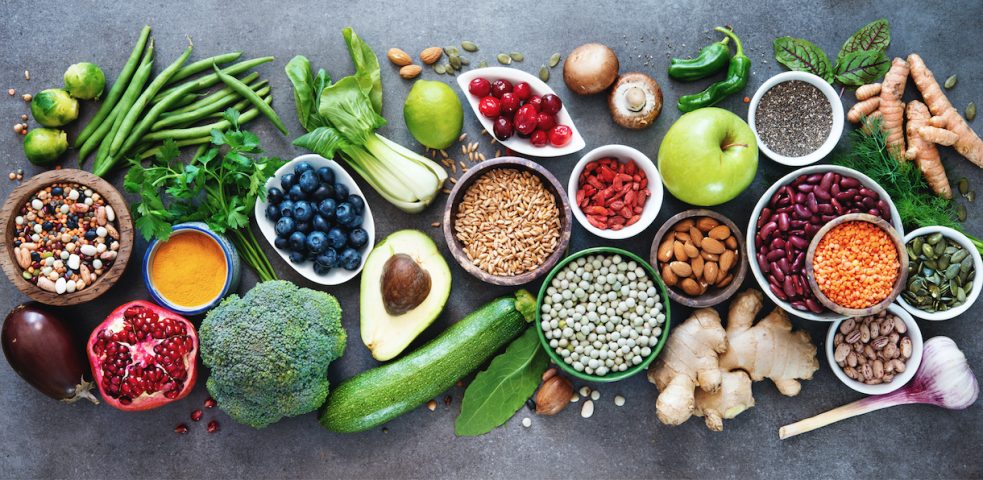
Feed your microbiome deliberately. Fermented foods (kimchi, sauerkraut, kefir, kombucha) have the strongest evidence for increasing microbial diversity and reducing systemic inflammation. Make them a regular part of your diet, not an occasional novelty.
Treat stress as a skin issue. The cortisol-gut-skin pathway is well-established. Whatever genuinely lowers your stress — breathwork, meditation, sleep, time outside — is also working on your skin. This isn't soft advice. It's biochemistry.
Consider targeted probiotics for specific conditions. The evidence is strongest for eczema and psoriasis. Don't grab whatever's on the shelf — research specific strains and dosages, or talk to a practitioner who knows the literature.
Eat real food. Not because any single food is magic, but because ultra-processed diets consistently correlate with the exact kind of gut dysbiosis that drives skin inflammation.
Work from both sides. Internal health and external care aren't competing approaches — they're complementary. Your skin responds to everything: what you eat, how you sleep, what you put on it, and what's happening in your gut. The conventional approach of treating skin purely from the outside misses most of the picture.
That's why we exist. Nightingale is built on the idea that healing is integrated — not mind or body, not internal or external, not science or intuition. All of it, together.
Want to keep going? Read why we chose tallow or learn about our healing practice.
Sources
Bowe, W.P. & Logan, A.C. "Acne vulgaris, probiotics and the gut-brain-skin axis." Gut Pathogens, 2011. PubMed
Gut-skin axis review. Gut Microbes, 2025. PMC
Parodi, A. et al. "Small intestinal bacterial overgrowth in rosacea." Clin Gastro Hepatol, 2008. PubMed
Wastyk, H.C. et al. "Gut-microbiota-targeted diets modulate human immune status." Cell, 2021. Stanford
Dairy-acne meta-analysis. Aghasi, M. et al. Clinical Nutrition, 2019. PMC
Ramsden, C.E. et al. "Re-evaluation of the traditional diet-heart hypothesis." BMJ, 2016. PMC
Ramsden, C.E. et al. "Sydney Diet Heart Study recovery." BMJ, 2013. PMC
Hooper, L. et al. "Reduction in saturated fat intake." Cochrane Database, 2020.
Grootveld, M. et al. Aldehyde formation in heated oils. De Montfort University, 2014-2020.
Seppanen, C.M. & Csallany, A.S. "4-HNE in soybean oil." JAOCS, 2002.


